Dental Implants vs. Mini Dental Implants: Which Option Is Right for Your Smile?
September 22, 2026 9:00 amIf you are missing teeth or tired of a denture that shifts when you eat, dental implants may already be somewhere on your radar. Then you start researching and find mini implants, traditional implants, bone grafting, implant dentures, and about twelve tabs open before you are any closer to knowing what actually fits your situation.
Traditional dental implants and mini dental implants have some things in common, but they are not interchangeable. They differ in size, how they are placed, and the types of restorations they can support. At Villa Vista Dental in Elk Grove, Dr. Ricky Tin looks at your teeth, bone support, bite, and what you are hoping to accomplish before recommending one approach.
For some patients, a traditional implant is the stronger long-term choice for replacing an individual tooth. For others, mini implants can help stabilize a loose denture, especially when there is less bone available. The right answer depends much more on what is happening in your mouth than on which option sounds easier online.
Dental Implants vs. Mini Dental Implants
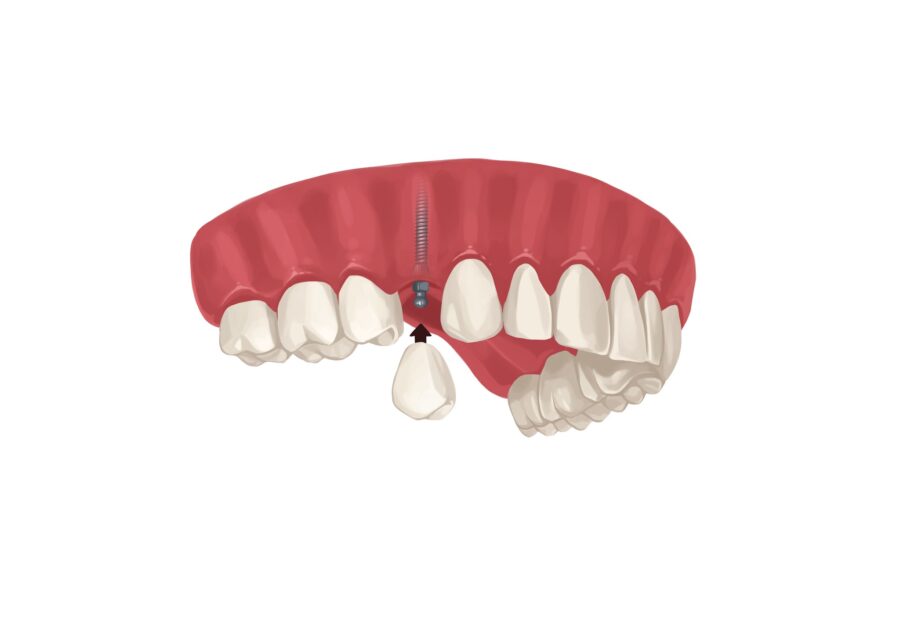
A traditional dental implant is a small post placed into the jawbone where a tooth is missing. Once it has integrated with the bone, it can support a crown, bridge, or certain types of dentures. Because it replaces the root portion of the tooth, it gives the restoration a firm foundation.
Mini dental implants work on the same basic idea, but the implant itself is narrower. They require less space in the jawbone and are often used to help secure dentures. At Villa Vista Dental, mini implants are one option we may consider when a patient wants more stability from a denture that tends to move.
That smaller size changes where mini implants are most helpful. They are not usually the first choice for every missing tooth, especially in areas that take heavier chewing forces. Traditional implants give us more flexibility when we are replacing individual teeth or planning a larger restoration.
So although both treatments involve an implant placed in the jaw, the jobs they are asked to do can be quite different. One may be replacing a tooth from root to crown, while the other may be helping a denture stay put through lunch instead of lifting every time you take a bite.
When Traditional Dental Implants Make Sense
Traditional implants are often used when one tooth is missing and the neighboring teeth are healthy. Instead of relying on those surrounding teeth for support, the implant stands on its own. After healing, a crown is attached so the replacement tooth can look and function much like the one that was lost.
They can also be used when several teeth are missing. Depending on the situation, implants may support a bridge or help anchor a larger restoration. The number of implants needed depends on how many teeth are being replaced and where they are located.
One of the biggest considerations is bone support. An implant needs enough healthy jawbone around it to stay stable. If the bone has thinned after a tooth has been missing for a while, Dr. Tin may recommend bone grafting before implant placement to rebuild the area.
That extra step can add time to treatment, but it can also create a stronger foundation for the implant. We would rather take the time to build up an area that needs it than place an implant where the support is not there.
When Mini Dental Implants May Be a Good Fit
Mini implants are especially helpful when a denture has become loose or unstable. If you have ever had a lower denture pop up while talking or shift sideways during a meal, you already know how frustrating that can be. Adhesive may help somewhat, but it does not always give the denture the steady hold people want.
Mini implants can provide points for the denture to attach to, which helps reduce that movement. Because the implants are narrower, they may also fit in areas where there is not enough bone width for a traditional implant without additional grafting.
For some patients, that can make treatment more straightforward. However, smaller does not automatically mean better, easier, or right for every mouth. The chewing forces in that area, the quality of the bone, and what the implant needs to support still have to be considered.
Mini implants tend to work best when we have a very specific job for them. If the main concern is a denture that will not stay put, they may be an option worth considering. If you need to replace a single molar or support a larger restoration, Dr. Tin may lean toward traditional implants instead.
The Difference in Size Affects the Treatment Plan
The biggest physical difference is right in the name: mini implants are thinner than traditional implants. That means they need less width in the jawbone. In the right situation, this can help patients who have already lost some bone after years of wearing dentures.
Traditional implants are wider and generally need more bone around them. That extra size allows them to handle more substantial chewing forces and support a wider range of restorations. For many single-tooth replacements, that makes them the preferred option.
Bone is not the only thing we look at, though. Dr. Tin also considers where the missing tooth is located, how your upper and lower teeth meet, and whether you clench or grind. A replacement tooth in the back of the mouth has a different workload than one near the front.
An exam and imaging tell us far more than implant measurements on a website ever could. We can see how much bone you have, what shape it is in, and whether there are nearby structures we need to plan around.
What About Healing Time?
Traditional implants usually need time to integrate with the jawbone before the final restoration is placed. Bone gradually grows around the implant surface, which helps create the stability needed for chewing. Depending on the case, that healing period can take several months.
Mini implants can sometimes be placed with a less involved procedure because of their smaller diameter. For denture stabilization, patients may also be able to use the implants sooner than they would with some traditional implant treatments. Still, the timeline varies based on the bone, the number of implants, and the type of restoration.
It is tempting to choose based on treatment speed alone, especially if you have already been dealing with missing teeth for a long time. But we want the implant to match the job it is being asked to do. A slightly longer process can make sense if it gives us the support needed for the final restoration.
Before treatment, Dr. Tin can walk you through the expected timeline so you know what happens between implant placement and the finished result. That way, you are not halfway through the process wondering why there is still another appointment on the calendar.
Can Mini Implants Help You Avoid Bone Grafting?
Sometimes they can. Because mini implants are narrower, they may fit into a ridge that does not have enough width for a standard implant. That can be especially helpful for certain denture patients who have lost bone over many years.
However, bone quantity is only part of the decision. The remaining bone also needs to be healthy enough to hold the implant securely. If the area is too thin, too weak, or shaped poorly for the planned restoration, another approach may still be better.
Traditional implants may require bone grafting when there is not enough support available. A graft adds bone to an area that has lost volume, giving the future implant a better place to sit. For some patients, that extra step can open up treatment options that otherwise would not be possible.
Some patients hear “bone graft” and immediately hope for whichever option avoids it. That is understandable, but skipping a graft only helps if the alternative will still give you a stable result. Dr. Tin can show you what the bone looks like and explain why one route may make more sense than another.
Which Option Feels More Like Natural Teeth?
When a traditional implant supports a single crown, the finished tooth is designed to function independently, much like a natural tooth. You can brush around it, floss around it, and chew without removing anything. For many patients, that is one of the biggest appeals.
Mini implants used to stabilize a removable denture work differently. The implants stay in the mouth, but the denture typically still comes out for cleaning. The improvement comes from the added hold, so the denture does not move as freely when you talk or eat.
Both can make daily life easier, but in different ways. Someone replacing one missing tooth may care most about having a fixed tooth that blends into the smile. Someone who already has a denture may care much more about finally eating without wondering whether the lower denture is about to shift.
Your priorities help shape the treatment plan. During a consultation, tell us what is bothering you now and what you want to be different when treatment is finished. That conversation can narrow down the options pretty quickly.
How Do You Know Which Implant Is Right for You?
The answer starts with what needs to be replaced. A single missing tooth, several missing teeth, and a loose full denture are three very different situations. From there, Dr. Tin looks at the amount of bone available and how much force the restoration will need to handle.
Your health history can affect the plan, too. Certain medical conditions, medications, smoking, and gum health can influence how well an implant heals. We will review those factors before recommending treatment.
Cost and treatment time also come into play. Traditional implants may involve extra steps such as bone grafting, while mini implants may offer a shorter route in certain denture cases. We can explain what each option would involve for your mouth instead of giving you a one-size-fits-all comparison.
Sometimes the answer is clear once we see the X-rays. Other times, there may be more than one workable option, with different tradeoffs in treatment time, cost, and the type of restoration. Dr. Tin can walk you through those differences so you know what each path would look like.
Dental Implants and Mini Dental Implants at Villa Vista Dental in Elk Grove
Traditional implants and mini implants can both make missing teeth easier to live with, but they are designed for different situations. Traditional implants are often used for individual tooth replacement and larger restorations, while mini implants can help stabilize certain dentures. Bone grafting may also be part of the plan if the jaw needs more support before implant placement.
Dr. Ricky Tin can evaluate your teeth, jawbone, bite, and current restoration before recommending a treatment plan. If you are tired of a missing tooth or a denture that never seems to stay where you put it, schedule a consultation with our Villa Vista Dental team in Elk Grove to find out which implant option could work for your smile!
Contact UsImage from Authority Dental under CC 2.0
Categorised in: Dental Implants