

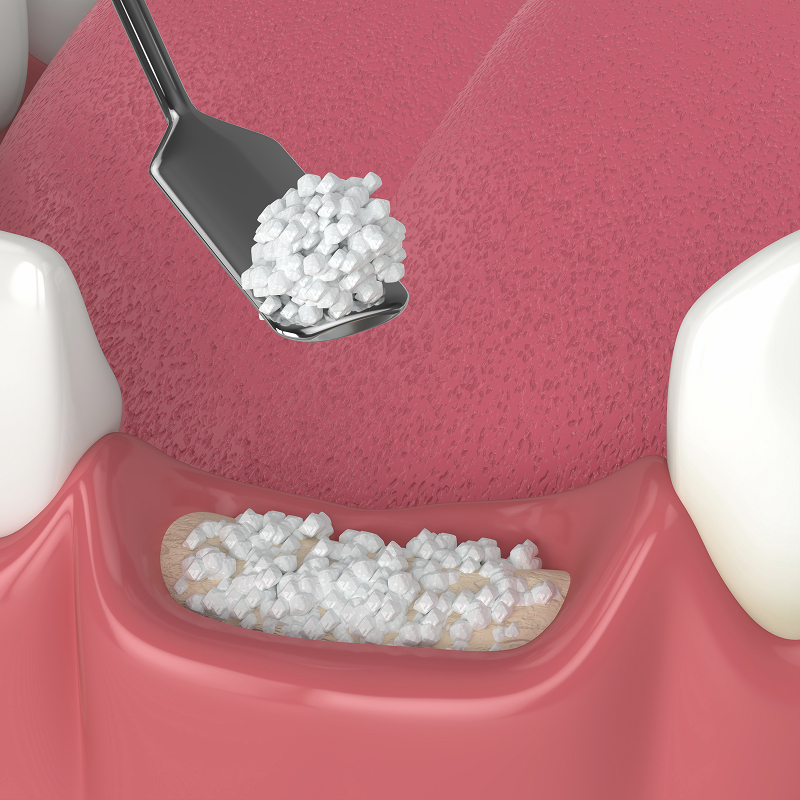
What is a bone graft?
Bone grafts are surgeries that place new bone or bone substitutes in areas of bone breakage or defect. Over time, the material merges with your bone through osseointegration. This gives the new bone a structure to grow around, reinforcing its density and strength. Bone grafting is a well-studied and safe procedure that has a high success rate when executed properly.
Bone grafts must be performed by experienced professionals like the ones at Villa Vista Dental. This reduces the risk of complications and helps to ensure proper healing. It’s also important to follow all aftercare instructions provided by your oral surgeon closely.

What to expect after a dental bone graft?
After your bone graft, you can expect to experience pain, swelling, and bruising. Our team may prescribe pain medications to mitigate this, but if not, you can use over-the-counter pain medications like ibuprofen.
Follow the instructions for any medications closely and seek medical attention if it doesn’t seem to be improving. Dr. Tin may supply antibiotics to help curve infection risk. You also may notice small fragments of bone expelled from the site over the first few days. This is normal, but don’t hesitate to call our office if it feels abnormal or if you’d like to have a check-up just to ensure you’re healing properly.
Contact Us
Frequently Asked Questions
Do I Have to Get a Bone Graft Before Getting Dental Implants?
Not every patient needs a bone graft before receiving dental implants. The decision depends on the amount and quality of bone available in the area where the implant will be placed. If you’ve experienced bone loss due to missing teeth, gum disease, or injury, a bone graft may be recommended to create a stable foundation for the implant. During your consultation, we’ll evaluate your jawbone and determine the best treatment plan for your long-term success.
When Can I Get an Implant Placed After Getting a Bone Graft?
The timing of dental implant placement depends on the type of bone graft performed and how quickly your body heals. In some cases, an implant can be placed at the same time as the graft. More commonly, patients wait several months to allow the grafted bone to integrate with the jaw. We’ll closely monitor your healing and recommend implant placement when the site is strong enough to support a predictable, lasting result.
Who Is a Good Candidate for a Bone Graft?
A bone graft may be beneficial for patients who have experienced jawbone loss and want to restore their oral health or become candidates for dental implants. Common candidates include individuals who have been missing teeth for an extended period, have advanced gum disease, or have suffered facial trauma. During your examination, we’ll assess your bone density, overall oral health, and treatment goals to determine whether bone grafting is right for you.
What Causes the Jawbone to Deteriorate?
The most common cause of jawbone deterioration is tooth loss. When a tooth is missing, the underlying bone no longer receives stimulation from chewing, causing it to gradually shrink over time. Other factors that can contribute to bone loss include periodontal disease, dental infections, trauma, and certain medical conditions. Early treatment is important because preserving or rebuilding jawbone structure can help maintain your facial appearance and support future restorative options.