
Bone Grafting Before Dental Implants: Why It May Be Recommended
August 18, 2026 9:00 amDental implants need a strong base in the jawbone. In many cases, there is already enough bone to place the implant where it needs to go. However, if the ridge has lost width or height, Dr. Ricky Tin may recommend a bone graft before moving forward.
That loss can happen after a tooth has been missing for a while, but it can also follow gum disease, infection, or an extraction. Once a tooth is gone, the jaw no longer gets the same stimulation from biting and chewing through that tooth root, so the bone in that area can gradually shrink. Because of that, an implant site that looks fine at the gumline may still need more bone underneath.
At Villa Vista Dental in Elk Grove, CA, Dr. Tin looks at how much bone is available, where the implant needs to go, and how well that area can support it. If there is enough bone, treatment may move ahead without grafting. If there is not, however, a bone graft can help rebuild the area before the implant is placed.
Why Dental Implants Need Bone
A dental implant is placed directly into the jawbone, so the bone around it has an important job from the start. It needs to hold the implant securely during healing, but it also has to support the pressure that comes later from biting and chewing. If the ridge is too thin or too shallow, there may not be enough bone around the implant in the position where it needs to go.
Once the implant is placed, the surrounding bone gradually bonds with its surface through a process called osseointegration. That process is what helps the implant become stable enough to support the replacement tooth. Because of that, Dr. Tin needs to see enough healthy bone around the implant site before treatment moves forward.
However, bone volume can vary quite a bit from one area to another. One missing-tooth site may have plenty of bone, while another area in the same mouth may be much narrower. So the location of the tooth, how long it has been missing, previous infection, and gum health can all affect what is available.
Why Bone Can Shrink After a Tooth Is Lost
While a natural tooth is in place, biting and chewing send pressure through the root into the surrounding jawbone. That regular stimulation helps the bone maintain its shape and volume. Once the tooth and root are gone, however, the jaw no longer receives that same stimulation in the area.
Because of that, the body can gradually resorb some of the bone that used to support the tooth. The ridge may become narrower, shorter, or both, especially as more time passes. Meanwhile, the gum can still cover the area normally, so the change underneath may not be obvious from the outside.
Still, the amount of bone loss varies from person to person. Some areas hold their shape fairly well, while others lose more volume over time. So rather than estimating from the calendar, Dr. Tin checks the actual bone before deciding whether an implant can be placed as planned.
What Is a Dental Bone Graft?
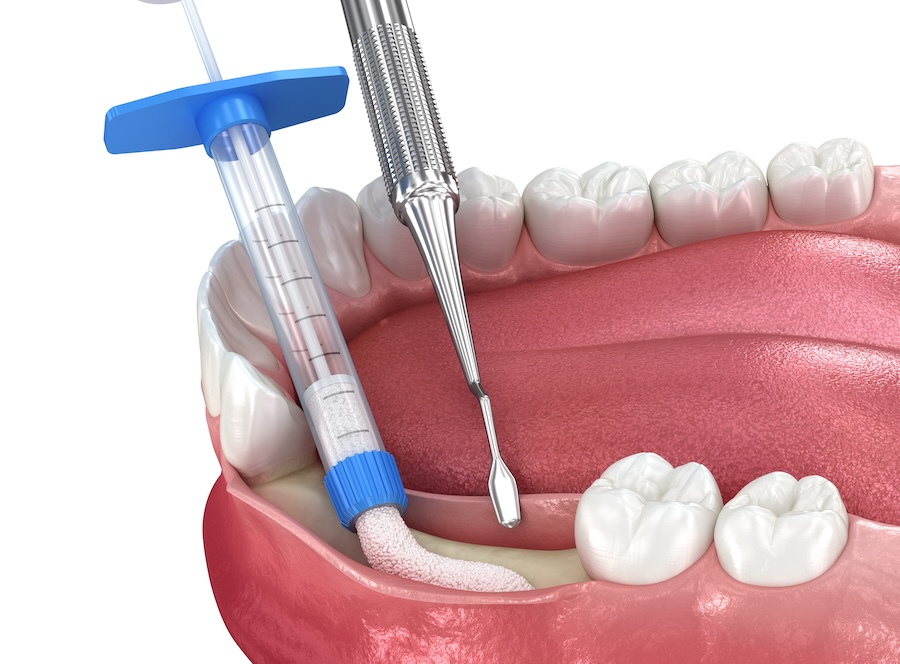
A dental bone graft adds grafting material to an area where more bone is needed. That material is placed where the ridge has lost width or height, and then the body gradually builds new bone through and around it. As the area heals, the site develops more support for a future implant.
The grafting material can come from different sources, depending on the procedure. In many cases, prepared donor, animal-derived, or synthetic materials are used, while some procedures use a patient’s own bone. Dr. Tin can explain what type is being used and why it fits that particular site.
The amount of grafting can also vary quite a bit. A small area around one future implant may need only a modest amount, while a narrow ridge may need more rebuilding. Because of that, two patients who both need a bone graft may still have very different procedures and timelines.
When Bone Grafting May Be Done
Bone grafting can happen at several points in the implant process. Sometimes it is done at the same time a tooth is removed, especially when an implant is planned later. In that situation, grafting material can be placed into the extraction socket to help preserve more of the ridge as it heals.
However, not every extraction needs a graft. Dr. Tin also looks at the condition of the socket, how much bone is already present, and where the future implant would need to go. If the area already has enough support, grafting may not be necessary.
In other cases, the tooth has already been missing for months or years. By then, some of the ridge may have shrunk, so grafting is done later to rebuild the site. Once the graft has healed enough, the implant can then be placed in the stronger area.
Can a Bone Graft and Implant Be Done at the Same Time?
In some cases, yes. If there is already enough bone to hold the implant securely but a smaller area still needs support, Dr. Tin may be able to place the implant and add grafting material at the same appointment. That allows the implant and graft to heal during the same period.
However, if the ridge needs more rebuilding, the graft may need to be done first. The area is then given time to heal before the implant is placed. Because of that, treatment takes an extra stage, but the new bone has more time to develop before it needs to support the implant.
The decision depends on how much bone is already there and how stable the implant can be at placement. A small defect beside an implant is different from a ridge that needs more width. So imaging helps Dr. Tin decide whether both procedures can happen together or whether they should be separated.
What Happens During Bone Grafting?
During a bone graft, Dr. Tin places grafting material where the bone is lacking. Depending on the situation, that material may go into an extraction socket, along the side of a narrow ridge, or into a larger area that needs rebuilding. Then the site is protected and the gum tissue is closed over or around it.
From there, the body gradually begins building new bone through the grafted area. The grafting material acts as a framework, while healing continues underneath the gum over the following weeks and months. Because that process takes time, some sites need several months before they are ready for implant placement.
How involved the procedure is depends on the size and location of the graft. A small graft near one tooth can be fairly limited, while a larger ridge graft takes more time to heal. Dr. Tin can explain what part of the jaw is being rebuilt and how that fits into the rest of the implant plan.
How Long Does a Bone Graft Need to Heal?
Healing time depends on the size of the graft, where it was placed, and how the area responds. Some smaller grafts may heal alongside an implant, while larger grafts may need several months before implant placement. So there is not one timeline that applies to everyone.
The gum tissue may feel better well before the deeper bone is finished healing. You may be eating more normally and barely thinking about the area while the graft is still developing underneath. Because of that, follow-up visits help Dr. Tin decide when the site is ready for the next step.
Once enough bone has developed, the implant can be placed. Then the implant needs its own healing period while osseointegration takes place. After that, the final crown or other restoration can be attached.
How Bone Grafting Changes the Implant Timeline
If grafting and implant placement happen at the same appointment, the overall timeline may not change very much. However, when the graft has to heal first, implant placement comes later. Then there is another healing period after the implant goes in.
Because of that, implant treatment can stretch over several months. The exact timing depends on how much grafting was needed, how quickly the bone heals, and when the implant is stable enough for the final restoration. One patient may move through those stages fairly quickly, while another needs more time between appointments.
If the tooth is being removed first, Dr. Tin can explain whether grafting will happen that day and when the implant may follow. If the tooth has already been missing for years, however, the sequence may look different because the ridge may need to be rebuilt first. So knowing where the graft fits into the process can make the overall timeline much easier to follow.
What Healing Is Like After a Bone Graft
Some soreness, swelling, and tenderness can happen after grafting. However, the amount varies depending on how much treatment was needed. Dr. Tin will give you instructions for eating, cleaning, and protecting the area while it heals.
For a little while, you may need to avoid chewing directly on that side. Softer foods can make the first few days easier, and then you can gradually return to your usual diet as the area settles down. Somehow, that is also when every crunchy snack in the kitchen suddenly looks better than usual.
Meanwhile, the bone underneath keeps healing even after the gum starts feeling much better. So even if the area feels normal after a couple of weeks, the graft may still need more time. Dr. Tin will let you know when the site has healed enough to move ahead.
Does Everyone Need a Bone Graft Before an Implant?
Not every implant site needs grafting. Many people already have enough bone, so the implant can be placed without that extra procedure. If the ridge has enough width and height and the bone is healthy, treatment may move ahead as planned.
However, grafting becomes more likely when a tooth has been missing for a long time or when bone was lost because of gum disease or infection. Some parts of the jaw are also naturally thinner than others. Because of that, one implant site may need grafting while another site in the same mouth does not.
Dr. Tin bases the recommendation on the individual area. The exam and imaging show how much bone is present and whether there is enough support around the planned implant position. From there, the next step depends on what that particular site needs.
What If There Is More Bone Loss?
More bone loss can mean a larger graft or a different type of grafting procedure. For example, the upper back jaw can have limited bone because the sinus sits above that area. In some cases, additional grafting may be needed there before an implant can be supported.
A narrow ridge may also need to be widened before implant placement. However, not everyone with bone loss needs a large procedure. Sometimes the defect is smaller and can be treated with a more limited graft.
So the amount and location of bone loss affect both the procedure and the timeline. Once Dr. Tin sees the shape of the ridge, he can plan the graft around that specific area. Then the implant can be placed once there is enough bone where it needs to go.
Preparing for a Bone Graft
Before treatment, let Dr. Tin know about your medications, health conditions, and any previous problems with healing. Those details can affect how the procedure is planned. If you take several medications, bringing an updated list is usually easier than trying to remember every name while you are in the chair.
If you smoke or use nicotine, mention that too. Nicotine can interfere with healing, which is especially relevant when new bone is trying to develop around a graft or implant. Dr. Tin can explain what he recommends before and after treatment.
You will also get instructions for food, cleaning, medications, and follow-up care. Once you know what the first few days will look like, it is easier to plan meals and keep the area protected. Having a few soft-food options ready ahead of time can make the first evening a lot simpler.
Bone Grafting and Dental Implants at Villa Vista Dental in Elk Grove, CA
If you are considering a dental implant, Dr. Ricky Tin can evaluate the missing-tooth area and see whether the jaw already has enough bone to support it. If it does, implant treatment may move ahead without grafting. However, if the site needs more bone first, he can explain whether grafting may be done at the time of extraction, later as a separate procedure, or together with implant placement.
At Villa Vista Dental in Elk Grove, CA, we can also go over how long the graft may need to heal and when the implant can move forward. That gives you a clearer sense of how the extraction, graft, implant, and final restoration fit together. Schedule a consultation with our team, and we can take a closer look at what your implant site needs!
Contact UsCategorised in: Bone Grafting